San Ramon's Top-Rated Roof Cleaning Service | 12+ Years Experience
Commercial Roof Cleaning in San Ramon and the Bay Area
Over 100+ 5 star Reviews On Google and Yelp
Why Commercial Roof Maintenance Matters More Than Most Property Owners Realize
Many commercial roofing systems fail long before they reach their projected service life. In most cases, the membrane itself is not the first component to fail. The failure begins gradually through a combination of standing water, biological contamination, UV exposure, drainage issues, seam stress, and deferred maintenance.
A TPO roof may carry a projected lifespan of 20 to 30 years. EPDM systems often exceed 25 years. PVC roofing systems can perform for decades when properly maintained. However, lifespan projections assume routine inspection and preventative maintenance.
Across the Bay Area, we routinely see commercial roofs that appear structurally sound from the ground but have significant contamination across the membrane surface. Biofilm develops around drains. Algae begins spreading across ponding areas. Dirt and airborne pollutants reduce reflectivity. Organic debris accumulates around HVAC equipment and parapet walls. These conditions create ongoing stress that often goes unnoticed until leaks appear.
The challenge for property owners is that roof deterioration rarely creates immediate symptoms. A roof can lose years of service life before any visible leak enters the building. By the time water reaches occupied space, the roofing system may already require extensive repairs.
Routine commercial roof cleaning addresses these issues before they become structural problems. It removes contaminants that trap moisture, supports proper drainage, helps preserve membrane flexibility, protects reflective surfaces, and allows facility managers to identify developing issues before they become expensive failures.
For commercial properties, preventative maintenance consistently costs less than reactive repairs. Roof cleaning should be viewed as part of a long-term asset management strategy rather than a cosmetic service.
Understanding TPO Roofing Systems and Why They Require Maintenance
TPO roofing systems dominate modern commercial construction because they combine durability, energy efficiency, and relatively low lifecycle costs. The bright white membrane reflects solar radiation and helps reduce cooling demand throughout the building.
Over time, contamination changes that performance.
Airborne pollutants, dirt accumulation, biological growth, pollen, industrial fallout, and environmental debris gradually cover the membrane surface. As contamination builds, reflectivity declines. The roof absorbs more heat. HVAC systems work harder. Cooling costs increase.
The problem becomes more significant in the Bay Area because environmental conditions vary dramatically. Properties near transportation corridors experience different contamination than properties near open space preserves or heavily wooded neighborhoods. Roofs near industrial areas accumulate different pollutants than office buildings in suburban business parks.
TPO roofs also rely heavily on seam integrity. Standing water and biological growth create additional stress on seams, penetrations, and transition points. Ponding areas frequently become collection zones for contamination.
Routine soft wash cleaning helps maintain:
- Membrane reflectivity
- Surface condition
- Drainage performance
- Seam visibility for inspections
- Overall roof appearance
It also allows property managers to monitor the roof more effectively because contamination no longer hides developing issues.
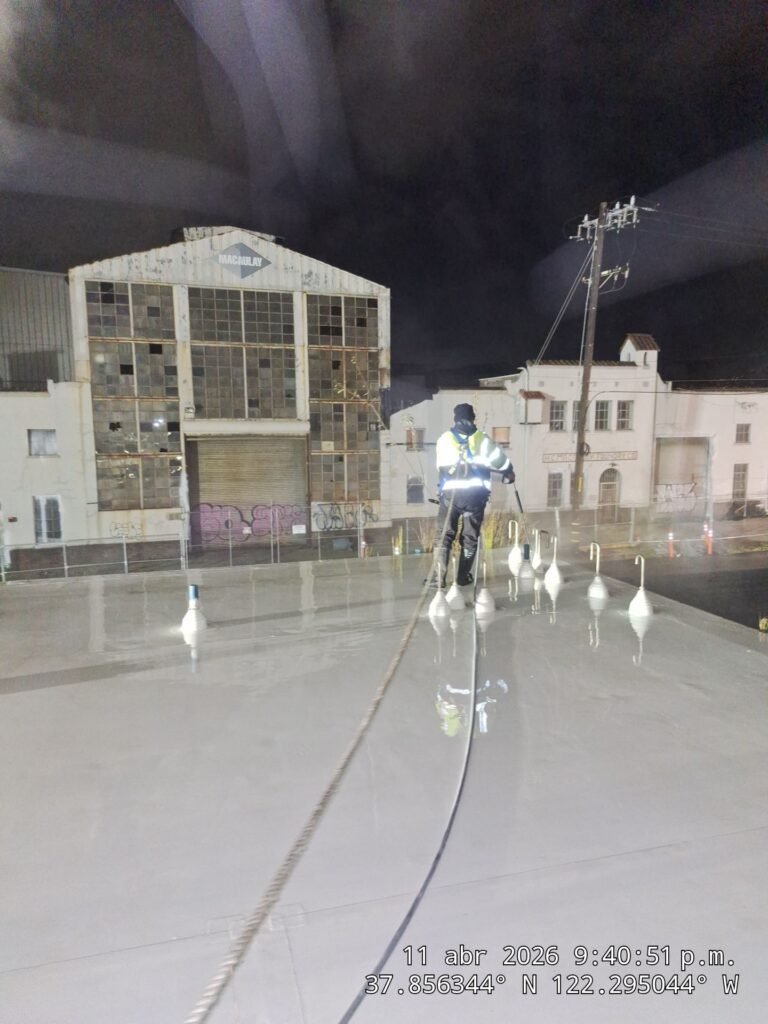
Understanding EPDM Roofing Systems and Common Failure Patterns
EPDM roofing systems perform exceptionally well in commercial environments because of their flexibility and weather resistance. However, they face unique maintenance challenges.
Unlike reflective TPO membranes, EPDM roofs absorb more heat. Organic contamination often becomes less visible, which causes many property owners to underestimate maintenance requirements.
One of the most common issues we encounter on EPDM roofs involves drainage-related contamination. Debris accumulates around drains and low spots. Water remains trapped for extended periods. Biological growth develops in these areas and begins spreading outward.
Over time, ponding water contributes to:
- Accelerated membrane wear
- Increased seam stress
- Flashing deterioration
- Insulation saturation risks
- Reduced drainage performance
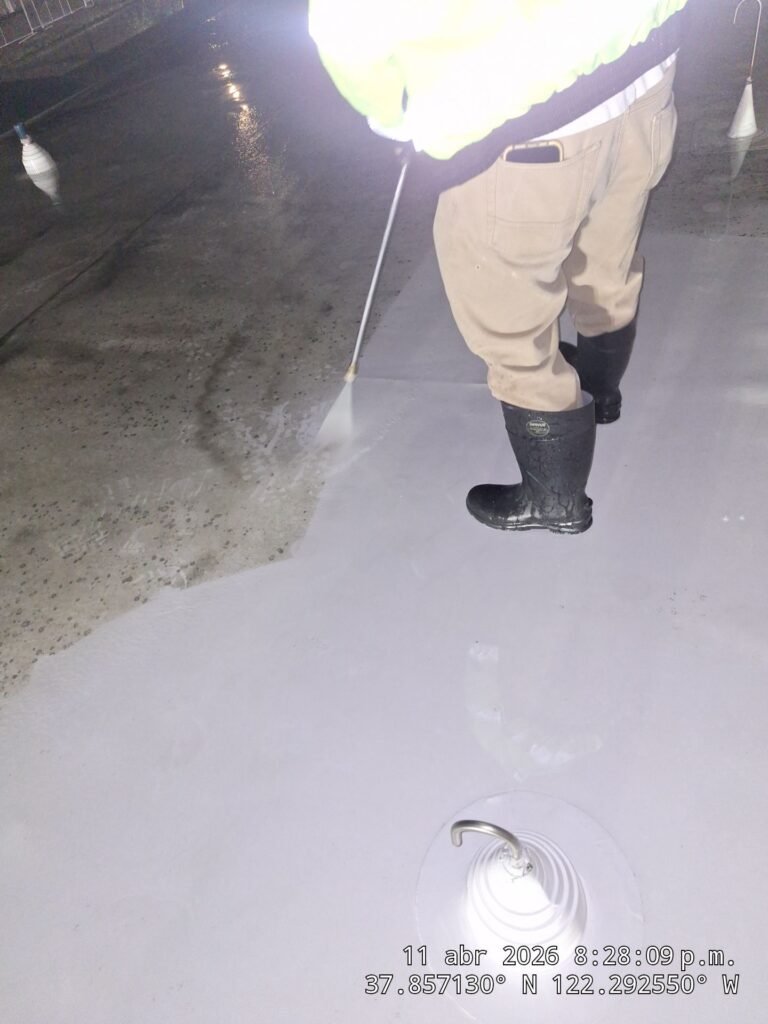
Routine soft wash maintenance removes these contaminants before they create larger problems. Cleaning also improves inspection quality because roof consultants, maintenance teams, and facility managers can evaluate membrane condition more accurately.
For EPDM roofs, maintenance is less about appearance and more about preserving system performance.
How Commercial Roof Cleaning Improves Energy Efficiency
Many building owners focus on leaks and repairs while overlooking one of the largest financial impacts of roof contamination: energy performance.
Reflective roofing systems depend on clean surfaces to perform as designed. Dirt, algae, pollution, and biological films reduce reflectivity. As the roof darkens, it absorbs more solar heat.
This additional heat transfers into the building and increases cooling demand.
For:
- Office buildings
- Medical facilities
- Educational campuses
- Retail centers
- Industrial facilities
- Multi-family properties
this can create meaningful increases in energy consumption over time.
A clean roof helps maintain the thermal performance originally intended by the roofing manufacturer.
Benefits may include:
- Improved solar reflectivity
- Reduced rooftop heat absorption
- Lower HVAC workload
- More stable indoor temperatures
- Better long-term membrane performance
For large commercial facilities, preserving roof reflectivity becomes a building operations issue rather than a cleaning issue.
Why Property Managers, HOAs, and Facility Managers Include Roof Cleaning in Reserve Planning
One of the biggest content gaps in the Maxx article is reserve planning.
Commercial property owners need to understand that roof cleaning is not just maintenance. It is financial planning.
When reserve studies estimate roof replacement timelines, they assume ongoing maintenance occurs. Deferred maintenance shortens those timelines.
For HOAs, apartment communities, business parks, and commercial campuses, shortening roof life by even five years can represent hundreds of thousands of dollars in accelerated capital expenses.
Routine roof cleaning supports:
- Longer replacement cycles
- Better reserve planning accuracy
- Reduced emergency repair costs
- Lower risk of tenant disruption
- Better documentation for stakeholders
This is why many sophisticated property managers schedule roof maintenance proactively rather than waiting for visible problems to develop.
Ponding Water: One of the Biggest Threats to Commercial Roof Lifespan
Ponding water deserves its own discussion because it contributes to more commercial roofing failures than many property owners realize.
Commercial roofs are designed to drain.
When water remains on the roof for extended periods, several problems begin developing simultaneously.
Ponding water:
- Accelerates membrane aging
- Increases seam stress
- Supports biological growth
- Promotes contamination buildup
- Increases structural load
- Reduces drainage performance
- Raises leak potential
Many facility managers treat ponding water as normal.
It isn’t.
Persistent standing water usually signals:
- Drainage issues
- Roof settlement
- Debris accumulation
- Design deficiencies
- Maintenance neglect
Roof cleaning helps identify these issues before they become major repair projects.
Why Pressure Washing Is Dangerous for Commercial Roofing Systems
Many contractors approach commercial roof cleaning incorrectly.
Pressure washing introduces unnecessary risk.
High pressure can:
- Damage membranes
- Separate seams
- Force water beneath roofing systems
- Remove protective coatings
- Damage flashing
- Accelerate deterioration
This is particularly risky for:
- TPO
- EPDM
- PVC
- Silicone coatings
- Acrylic coatings
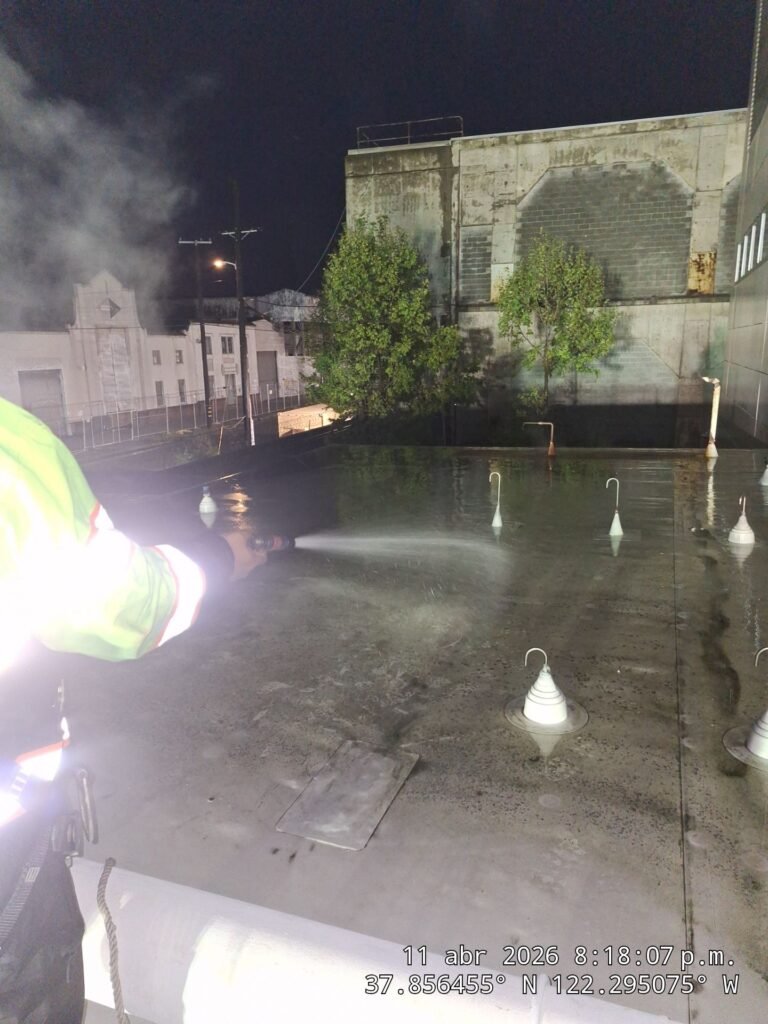
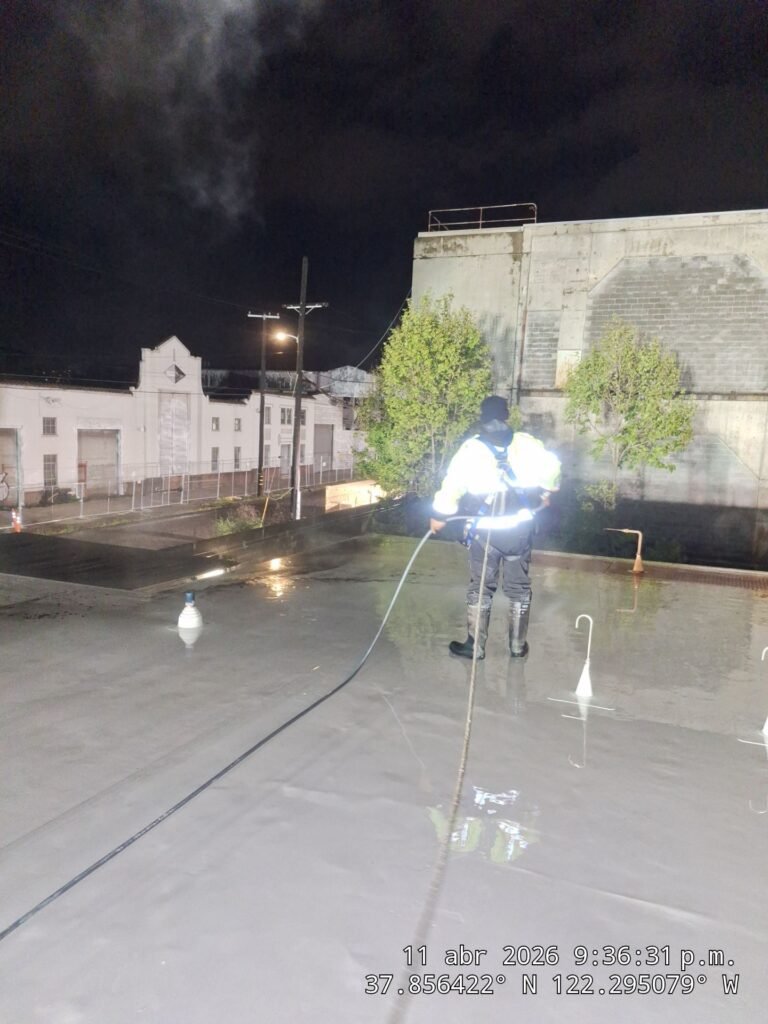
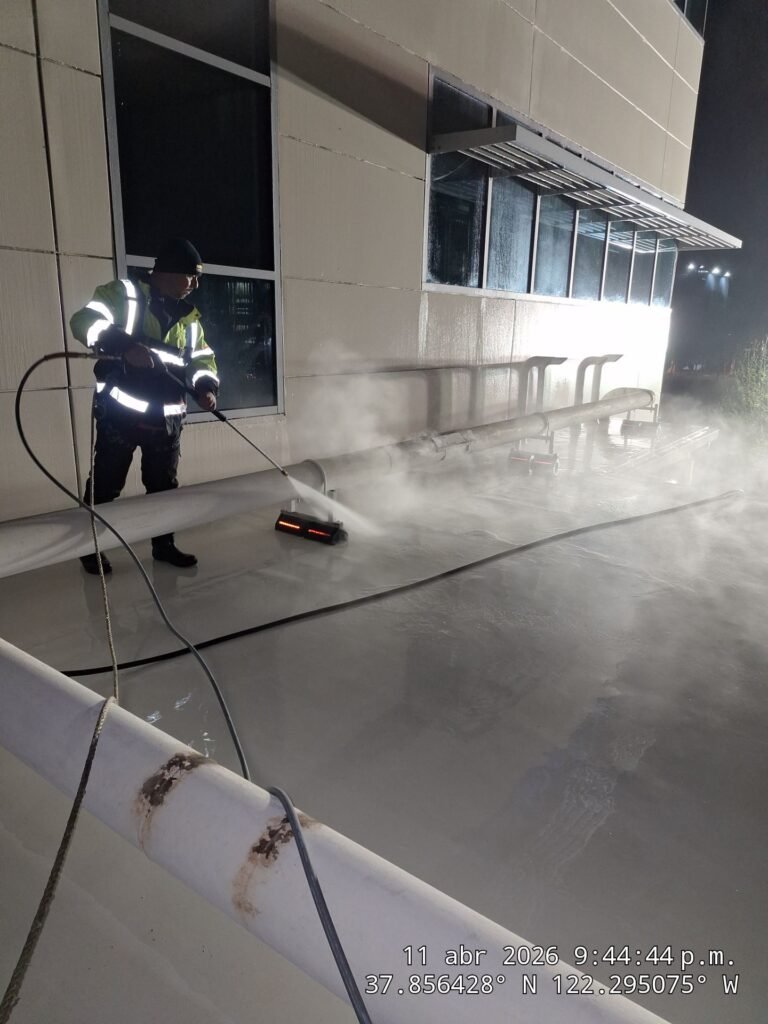
PPWPM uses low-pressure soft wash methods designed to remove contamination while protecting the roofing system.
The cleaning solution performs the work.
Pressure does not.
Our Commercial Roof Cleaning Process
Step 1 – Roof Assessment
We evaluate:
- Roofing material
- Membrane condition
- Drainage performance
- Ponding areas
- Biological growth
- Penetrations
- HVAC zones
- Existing repairs
Step 2 – Drainage Evaluation
We inspect:
- Roof drains
- Scuppers
- Gutters
- Collection points
- Debris zones
Proper drainage remains critical to roof performance.
Step 3 – Soft Wash Treatment
We apply a roof-specific cleaning solution calibrated to:
- Roof type
- Contamination severity
- Environmental conditions
- Existing coatings
Step 4 – Detail Cleaning
Special attention goes to:
- Drainage areas
- Equipment zones
- Walk pads
- Flashing transitions
- Parapet walls
Step 5 – Final Inspection and Documentation
We document:
- Roof condition
- Cleaning results
- Drainage observations
- Areas requiring monitoring
Insurance, Warranty Protection, and Compliance
Many manufacturers require ongoing maintenance to preserve warranty eligibility.
Insurance carriers increasingly expect evidence of roof maintenance and condition monitoring.
Documentation helps support:
- Warranty compliance
- Insurance reviews
- Reserve studies
- Capital planning
- Asset management
We can provide:
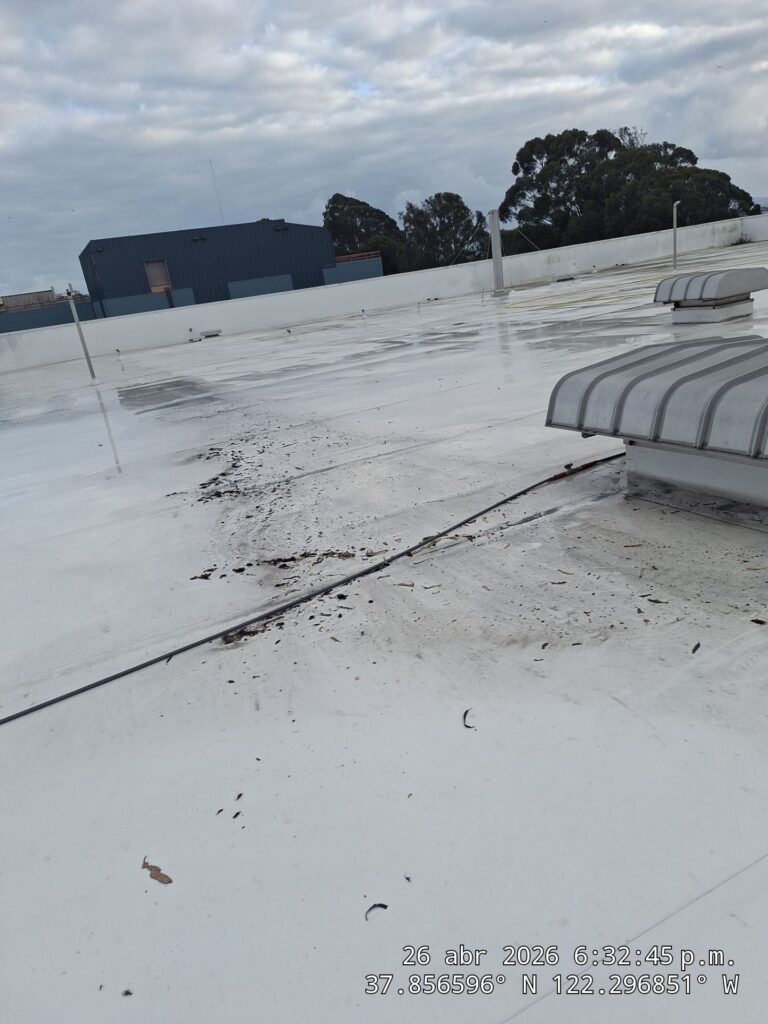
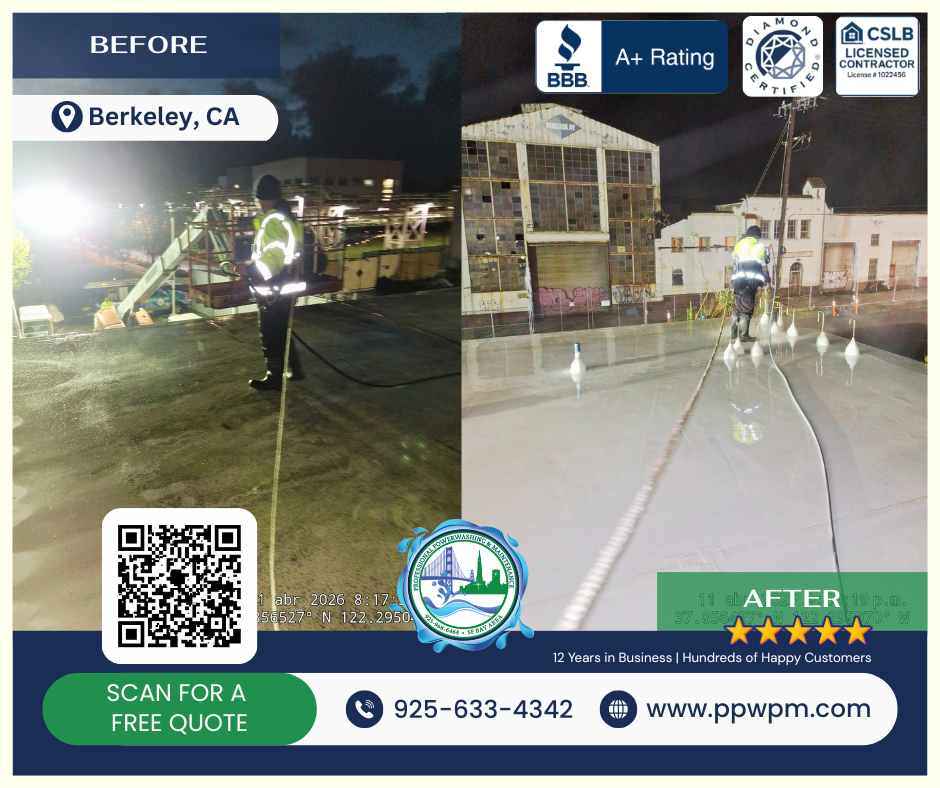
- Before-and-after imagery
- Condition reports
- Maintenance documentation
- Drone photography when requested
Commercial Roof Cleaning Service Areas
Contra Costa County
San Ramon, Danville, Alamo, Blackhawk, Walnut Creek, Lafayette, Orinda, Moraga, Concord, Pleasant Hill, Martinez, Clayton
Tri-Valley
Pleasanton, Dublin, Livermore, Sunol
Alameda County
Oakland, Berkeley, Alameda, Emeryville, Hayward, Fremont, Newark, Union City, Castro Valley
Peninsula & San Mateo County
San Mateo, Foster City, Belmont, San Carlos, Redwood City, Menlo Park, Burlingame, Hillsborough
South Bay & Silicon Valley
Palo Alto, Mountain View, Sunnyvale, Cupertino, Santa Clara, Saratoga, Campbell, Los Gatos, Milpitas, San Jose
North Bay
Napa, Sonoma, Petaluma, Santa Rosa, Healdsburg, Windsor
Frequently Asked Questions About Commercial Roof Cleaning
Most commercial roofs benefit from a professional inspection at least once per year and cleaning every one to three years, depending on environmental exposure and roof conditions.
Properties located near trees, industrial areas, busy roadways, coastal environments, or areas with frequent fog and moisture often require more frequent maintenance. Buildings with flat or low-slope roofing systems may also accumulate debris and biological growth faster than expected.
Regular cleaning helps prevent contamination from building up to the point where it affects drainage, membrane performance, roof reflectivity, and overall roof lifespan. A preventative maintenance schedule allows property owners to address small concerns before they develop into larger repair issues.
Yes. One of the primary benefits of commercial roof cleaning is extending the useful life of the roofing system.
Contaminants such as algae, mold, mildew, moss, biofilm, dirt, pollen, and environmental debris trap moisture against the roof surface and accelerate deterioration. These conditions place additional stress on membranes, seams, flashings, coatings, and drainage systems.
Routine cleaning removes these contaminants before they can cause long-term damage. It also improves visibility during inspections, making it easier to identify developing issues early.
For many commercial properties, consistent maintenance can help the roofing system reach or exceed its projected service life while delaying costly replacement projects.
Yes. While roof cleaning does not repair leaks, it helps reduce the conditions that often contribute to them.
Blocked drains, accumulated debris, ponding water, and biological growth can all increase moisture retention and place additional stress on roofing materials. Over time, these conditions may contribute to seam deterioration, flashing issues, and water intrusion.
Cleaning improves drainage performance, removes debris from critical areas, and allows facility managers and roofing professionals to identify developing concerns before they become active leaks.
Many roofing problems are easier and less expensive to address when discovered early through routine maintenance rather than after water enters the building.
Yes, particularly on reflective roofing systems such as TPO, PVC, coated roofing systems, and other cool roof products.
These roofing systems are designed to reflect solar radiation and reduce heat absorption. As dirt, pollution, algae, and environmental contaminants accumulate, reflectivity decreases and the roof absorbs more heat.
This additional heat transfers into the building and may increase cooling demands during warmer months.
Regular cleaning helps maintain the reflective properties of the roof, allowing it to perform closer to manufacturer specifications. For larger facilities, preserving roof reflectivity can contribute to lower HVAC workload and improved energy efficiency over time.
In most cases, no.
Pressure washing can damage commercial roofing systems by forcing water beneath membranes, weakening seams, damaging coatings, and accelerating wear. This is particularly important for TPO, EPDM, PVC, silicone-coated, and acrylic-coated roofing systems.
High-pressure cleaning may also create warranty concerns depending on the roofing manufacturer and system type.
Soft washing uses low-pressure application combined with specialized cleaning solutions to remove biological growth and contamination safely. This method protects roofing materials while delivering more effective long-term results.
For most property owners, yes.
Commercial roof replacement represents one of the largest capital expenses associated with a building. Depending on size, material, and complexity, replacement costs can range from tens of thousands to hundreds of thousands of dollars.
Routine roof cleaning costs a fraction of replacement and helps:
- Extend roof lifespan
- Improve drainage
- Reduce leak risk
- Preserve energy efficiency
- Support warranty compliance
- Improve inspection visibility
- Protect long-term property value
Preventative maintenance typically delivers a far better return on investment than waiting for major roofing problems to develop.
It can.
Many insurance carriers expect commercial property owners to maintain their buildings, including roofing systems. Significant biological growth, excessive debris accumulation, ponding water, and visible neglect may raise concerns during inspections, policy renewals, or claims investigations.
Routine roof cleaning demonstrates proactive maintenance and helps create documentation showing that the property owner is actively preserving the roofing system.
Maintaining service records, inspection reports, and before-and-after documentation can also support insurance reviews and asset management planning.
Soft washing can be performed on most major commercial roofing systems when proper methods and chemistry are used.
Common roof types include:
- TPO roofing systems
- EPDM rubber roofing
- PVC roofing systems
- Modified bitumen roofing
- Built-up roofing (BUR)
- Commercial metal roofs
- Silicone-coated roofs
- Acrylic-coated roofs
- Elastomeric roof coating systems
- Flat and low-slope commercial roofs
Each roofing system requires specific treatment methods, application rates, and cleaning solutions. A one-size-fits-all approach is not appropriate for commercial roofing maintenance.
A professional commercial roof cleaning service should begin with a roof assessment and condition review.
The process typically includes:
- Evaluation of roofing materials
- Inspection of drains and drainage systems
- Identification of biological growth and contamination
- Soft wash treatment application
- Cleaning of critical drainage areas
- Final inspection and documentation
Many property managers also request condition reports, maintenance records, and photographic documentation to support reserve planning, insurance requirements, and long-term asset management.
The goal is not simply to clean the roof. The goal is to preserve the roofing system, improve performance, and extend the life of a major building asset.
Slate roofs require specialized access methods and controlled movement. Improper foot placement can crack tiles or weaken overlaps. Slate roof cleaning should only be handled by contractors familiar with slate systems.
Yes. Clean slate roofs improve curb appeal, strengthen buyer confidence, and support luxury property presentation. Realtors frequently highlight properly maintained slate roofing systems in high-value home listings.
Protect Your Commercial Roofing Investment
Commercial roof replacement is one of the largest capital expenses most property owners will face.
Routine roof cleaning helps:
✔ Extend roof lifespan
✔ Reduce leak risk
✔ Improve drainage performance
✔ Support warranty compliance
✔ Preserve energy efficiency
✔ Protect long-term asset value
At PPWPM, we help commercial property owners throughout San Ramon and the Bay Area preserve roofing systems through low-pressure roof cleaning designed around long-term performance, not short-term appearance.
What Your Neighbors Have Been Saying About Us
EXCELLENT Based on 126 reviews
 Posted on Google
 Greg BouchakianThey did a great job! Very thorough, on time, and made sure I was happy when done.Posted on Google
 Mary ShefferThis company was a pleasure to work with. They were punctual, courteous and did a terrific job. This was sll the way at the top with Josh to the men who actually did the work. My house is 40 years old and it now looks almost brand new. 😊 Thank you so much!Posted on Google
 tom albertexcellent service for a very moldy patio area as well as walkways. I would recommend these folks without reservation.Posted on Google
 DAVID ROSEAnd work was done in a fast and efficient mannerPosted on Google
 Kunjal VaitharaI couldn’t be happier with the service from Professional Power Wash and Management (PPWPM)! This job was done at my home in Walnut Creek, and the team did an absolutely fantastic job with both the power washing and the windows—everything looks spotless and refreshed. The windows are super clean I have a property with a front yard, backyard, and side yard—quite an area to be cleaned—along with a mix of surfaces including bricks, concrete, and even a tennis court. They handled every single detail with care and precision. It’s not easy to manage such variety, but they truly did an outstanding job across the board. A special shoutout to Ray, who I was in touch with throughout the process. He is truly wonderful—extremely patient, professional, and has outstanding customer service. What I really appreciated is that he genuinely understands what a customer wants. I’m someone who is very particular (a bit of a clean freak!), and when I pointed out certain things, he made sure everything was taken care of without hesitation. That level of attention and responsiveness really stands out. Honestly, when a business truly takes care of its customers, you know they’re going to do well—and that’s exactly the feeling I got here. Communication was seamless—every text message was responded to promptly, with no delays or confusion. The team was very punctual and arrived right on time. Everything was smooth and efficient from start to finish. They also offer a wide range of services, and based on this experience, I’ll definitely be using them again in the future. It was such a pleasant experience overall. You come across very few companies whose service is truly 10 on 10—and this is definitely one of them. I highly recommend PPWPM to everyone in Walnut Creek and beyond who is looking for power washing or any of the services they offer. I’m 101% sure they’ll do a great job. If you love a fresh-looking home, you will be absolutely happy and thrilled!Posted on Google
 Eva DeagenOn time. Friendly people. Great job. Great price.Verified by TrustindexTrustindex verified badge is the Universal Symbol of Trust. Only the greatest companies can get the verified badge who has a review score above 4.5, based on customer reviews over the past 12 months. Read more
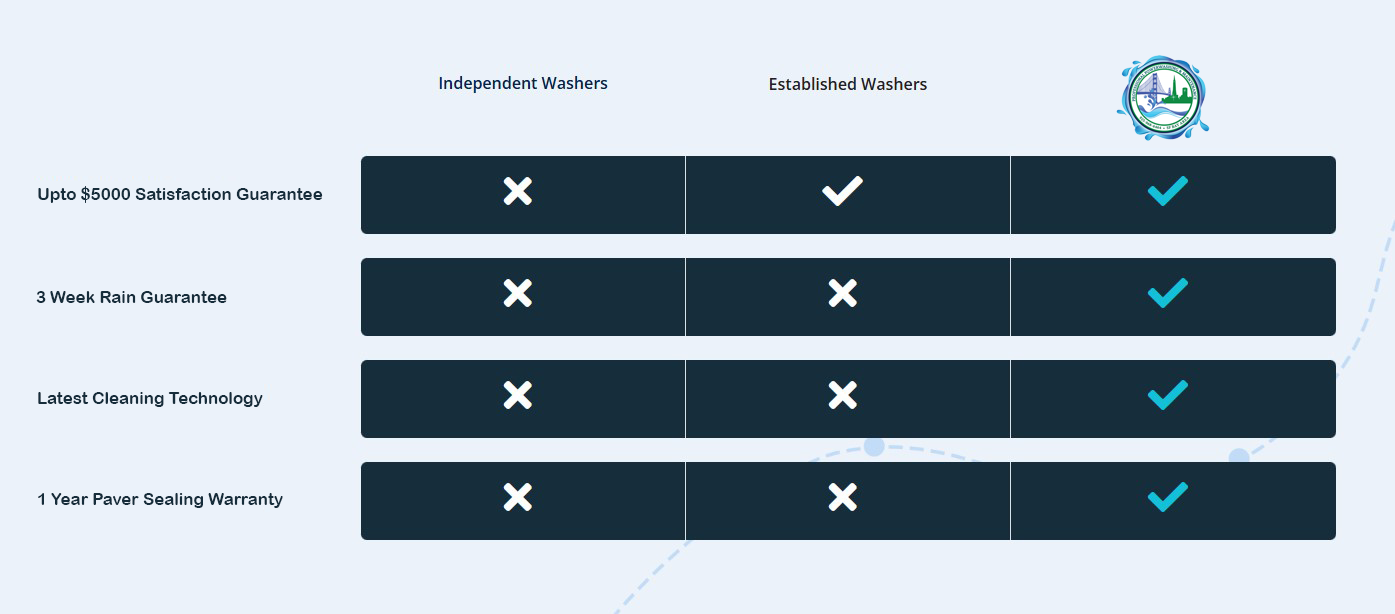
See How PROFESSIONAL POWER WASHING & PROPERTY MAINTENANCE COMPANY Is Different Than Other Service Providers
Secure The Top-Tier Service Near You
- Dublin, CA
- Danville, CA
- Alamo, CA
- Fairview, CA
- Castro Valley, CA
- Pleasanton, CA
- Hayward, CA
- Ashland, CA
- Cherryland, CA
- Moraga, CA
- San Lorenzo, CA
- San Leandro, CA
- Walnut Creek, CA
- Livermore, CA
- Lafayette, CA