
Deck cleaning and staining in the Bay Area
Deck Cleaning & Staining That Restores the Wood and Removes the Slip Risk
A weathered deck is not just a cosmetic problem. Winter algae makes boards genuinely slippery, and unprotected wood absorbs water it was never meant to hold. We clean, restore, and finish wood and composite decks across San Ramon and the East Bay.
Diamond Certified500+ Five-Star ReviewsLicensed & Insured (CSLB #1022456)Open 24 Hours
Bay Area deck restoration
A deck takes far more abuse than any fence
People often assume deck care and fence care are the same job. They are not, and the difference is orientation. A fence is vertical, so water runs off it. A deck is horizontal, so water sits on it, pools in it, and soaks into the end grain every time it rains.
That one difference drives everything. Deck boards absorb standing water, cycle through wet and dry, and take direct overhead UV all summer. On top of that they get walked on, furniture dragged across them, barbecue grease, planter rings, and leaf litter that holds moisture against the wood for weeks. A deck finish simply does not last as long as a fence finish, and anyone telling you otherwise has not maintained many decks.
The second difference is safety. Nobody slips on a fence. A shaded Bay Area deck after a wet winter grows a film of algae that is genuinely treacherous underfoot, and that is the most common reason homeowners call us in spring.
Get a Fast Quote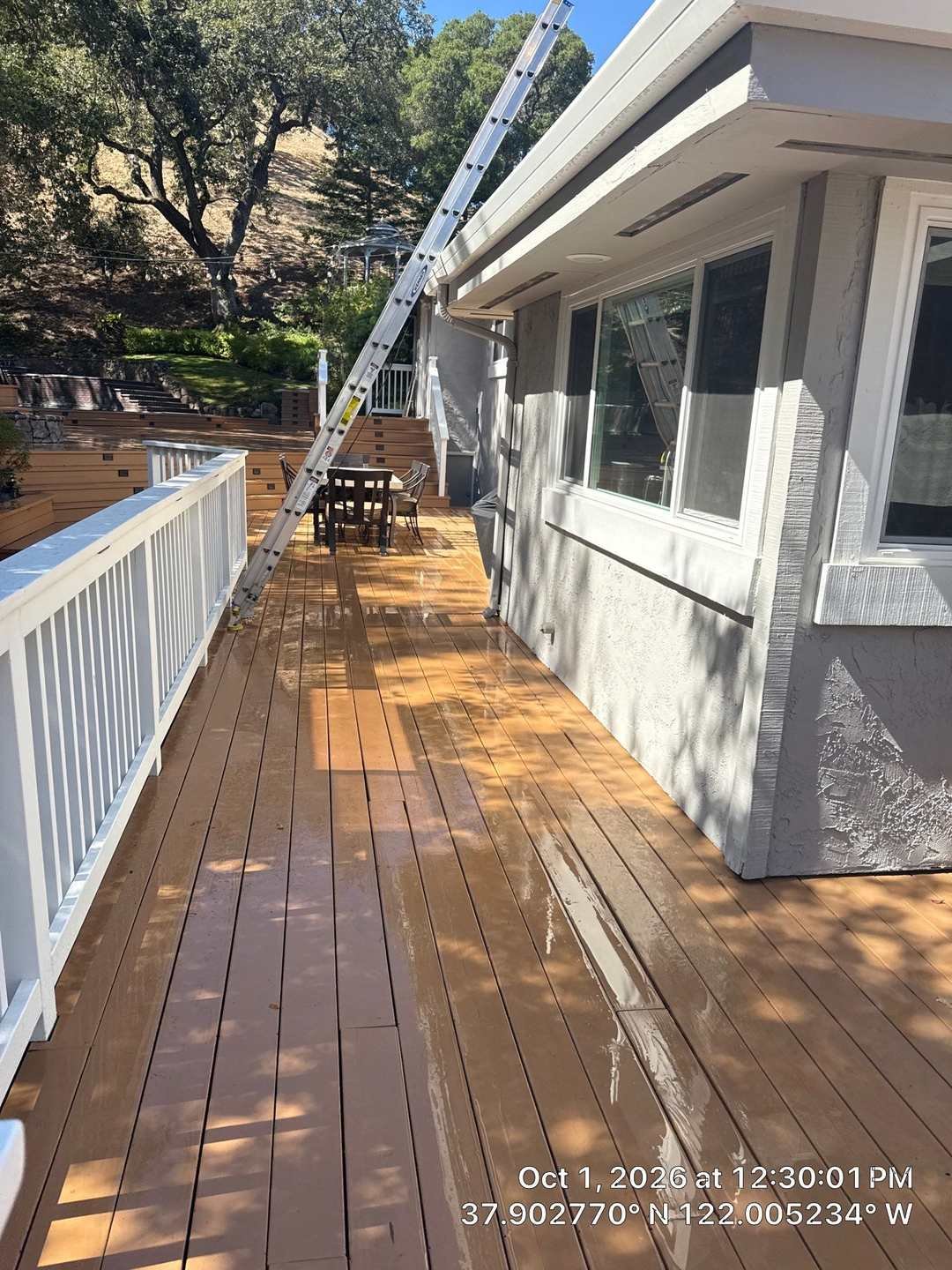
The safety issue nobody mentions
Why your deck gets slippery, and what actually fixes it
This is the part of deck maintenance that matters most and gets talked about least.
What that slipperiness actually is. It is a thin biofilm of algae, and often moss in the shadier corners. Our wet winters keep deck boards damp for weeks at a time, and shaded decks, north-facing decks, and decks under tree cover never fully dry out between storms. Algae colonizes that surface, and when it gets wet it becomes remarkably slick. It is not dirt and it is not worn finish, it is something alive.
Why rinsing it off does not work. A garden hose or a quick pressure rinse knocks the visible layer off and makes the deck look clean for a few weeks. The organism is still there, so it re-establishes quickly, usually before the season is out. Removing it properly means treating it so it is killed at the surface rather than simply displaced.
Where it is always worst. The north side, under eaves and overhangs that stay shaded, beneath outdoor furniture that never moves, around planter pots, in the gaps between boards where debris packs in, and on stairs, which is exactly where a slip is most dangerous. We pay particular attention to steps and landings for that reason.
Keeping it off. Once the deck is properly cleaned and finished, staying ahead of it is straightforward: clear leaf litter rather than letting it sit, move furniture occasionally, keep gaps between boards clear so water drains, and keep the deck on a maintenance cycle. A deck that is cleaned regularly almost never gets to the dangerous stage.
See the work
Watch a deck restoration
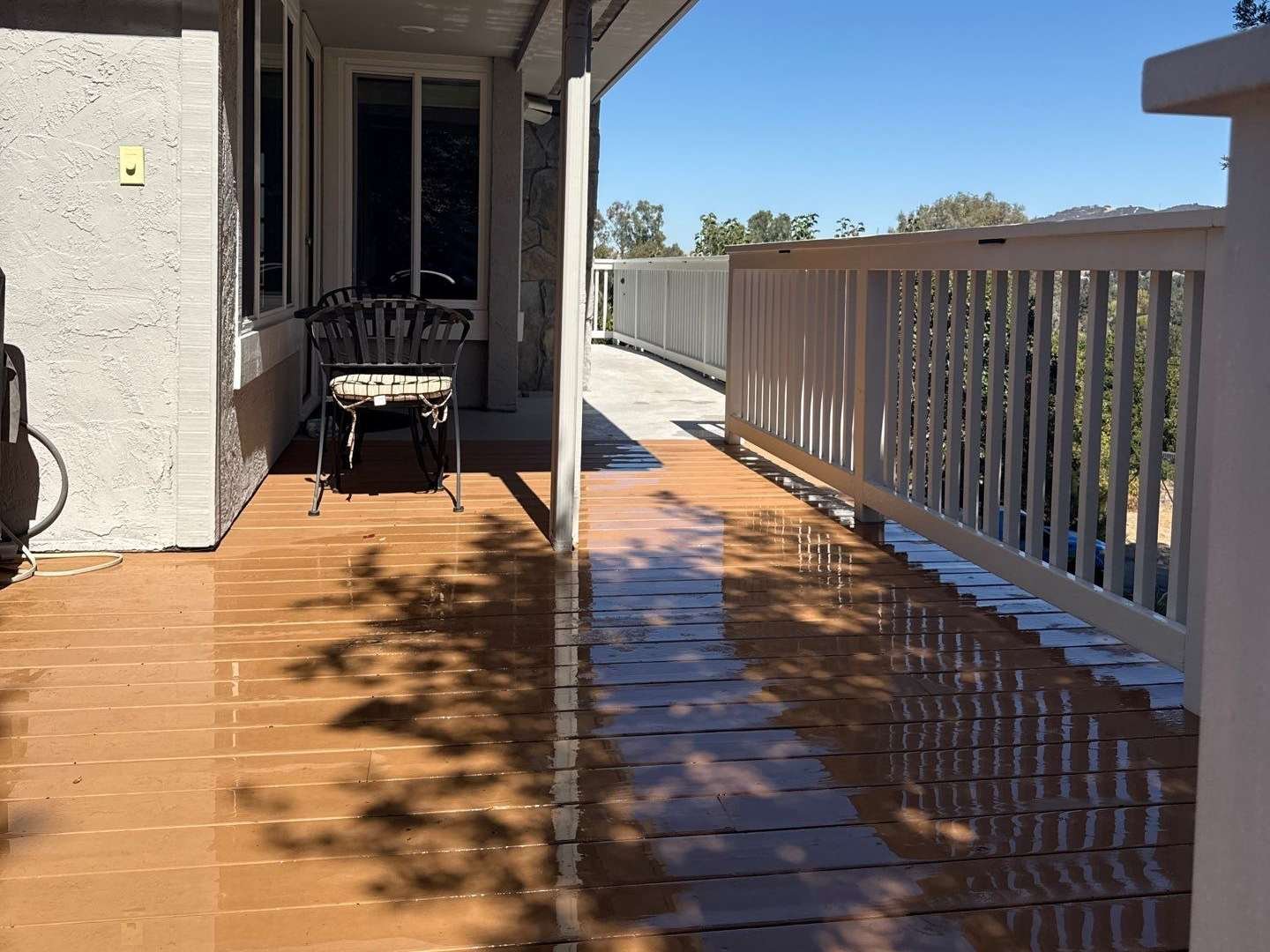
Years of weathering, algae, and gray oxidation lifted off in a single service. This is a real Bay Area deck.
Composite and capped decking
Yes, composite decks need cleaning too
The "maintenance-free" misunderstanding. Composite decking is sold as low maintenance, and compared to wood it genuinely is. But low maintenance is not no maintenance. Composite boards still collect pollen, dust, leaf tannins, grease, and, critically, the same algae and mold that make wood decks slippery. The mold does not feed on the composite itself, it feeds on the organic film that settles on top of it, which is why even a brand-new composite deck gets slick in a shaded Bay Area yard.
Can you pressure wash composite decking? Carefully, and never the way you would clean concrete. Excessive pressure permanently mars the embossed grain pattern on composite boards and can damage the protective cap layer on capped composite, and that damage voids warranties. Many manufacturers specify a maximum pressure and a fan tip. We clean composite at low pressure with a cleaner suited to the material, which lifts the growth without harming the surface.
Do not stain composite. Composite and PVC decking is not meant to be stained or sealed, and attempting it generally creates a peeling mess. What composite needs is correct cleaning, done on a sensible cycle. That is the whole maintenance program, and it is genuinely easy once it is on a schedule.
Do you need to sand a deck before staining it?
The honest answer is: sometimes, and far less often than people assume.
When sanding is not needed. On a deck with bare or previously penetrating-stained wood, a proper clean opens the grain and leaves a surface that accepts stain evenly. Sanding a whole deck in that situation is a great deal of labor for very little gain, and aggressive sanding can actually close the wood pores and reduce how well stain penetrates. Good cleaning does most of the work that people imagine sanding does.
When it genuinely is needed. If a deck was coated with a film-forming product, a solid stain or deck paint, and that film is now peeling, there is no shortcut. New finish applied over failing film will fail with it. That deck needs stripping or sanding first, and we will tell you plainly that it is a bigger job rather than quoting you a quick coat that we know will not hold. Spot sanding is also sensible for splinter-prone areas, handrails people touch, and raised grain on high-traffic boards.
Which finish for a deck. Decks take more punishment than fences, so the finish question is sharper. Penetrating semi-transparent stain remains the most practical choice for most wood decks: it blocks UV, holds color, and critically it wears down gradually rather than peeling, so re-coating later is straightforward. Film-forming solid stains and deck paints look excellent initially and hide badly mismatched boards, but on a horizontal surface that holds water they are far more prone to peeling than they are on a fence.
Rails and underside. Handrails take direct sun and constant hand contact, so they often need attention before the deck floor does. We finish rails and visible structure as part of the job rather than treating the walking surface in isolation, because a restored floor with gray rails looks half-done.
Get your free estimate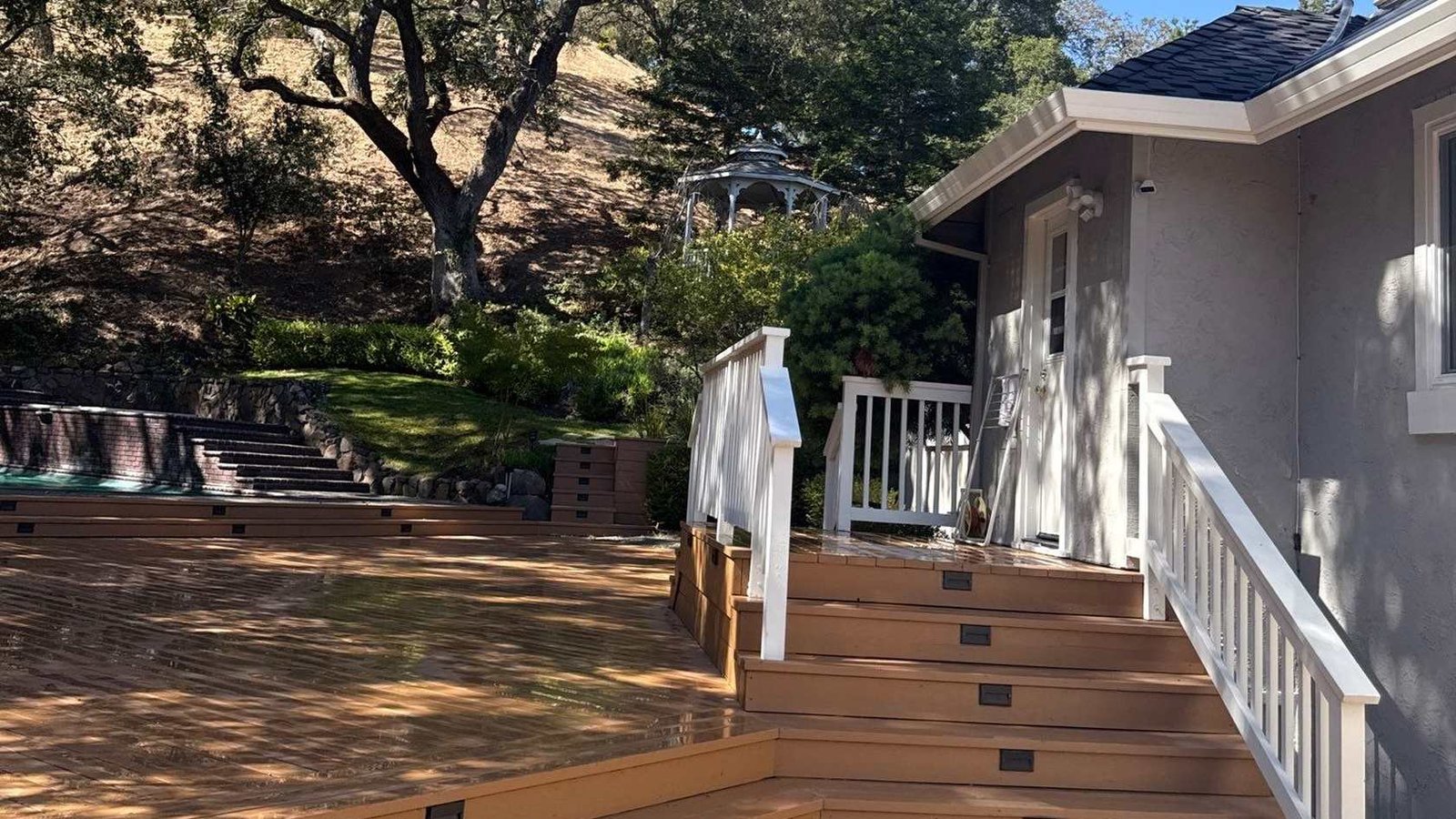
How often a deck really needs cleaning and re-coating
Cleaning: at least once a year. For most East Bay decks, an annual clean in spring is the baseline, timed after the wet season has done its worst and before the deck gets used all summer. Decks under heavy tree cover, decks beside pools, and decks that stay shaded often benefit from twice a year. This is the single highest-value thing an owner can do, because it addresses both the slip hazard and the slow damage of organic matter sitting on wood.
Re-coating: typically every two to three years. A deck finish does not last as long as the same product on a fence, for the orientation reasons above. Horizontal boards in full sun may need attention sooner, covered or shaded decks may stretch longer. The practical test is simple: sprinkle water on the boards. If it beads, the finish is still working. If it soaks straight in and darkens the wood, the deck is no longer protected.
What a cleaning often reveals. Once years of grime come off, the real condition of a deck becomes visible for the first time, and that is genuinely useful. We frequently find soft spots at board ends, fasteners backing out, split boards, and early rot where a post meets the deck or where a planter has sat for years trapping moisture. We are not a deck builder and will not pretend to be, but we will point out what we see with photos so you can address it before it becomes a structural problem.
Why staying on a cycle costs less. A deck maintained annually needs a light clean and an occasional re-coat. A deck left for a decade needs stripping, extensive prep, and sometimes board replacement. The owners who spend the least over the life of a deck are the ones who never let it get bad.
Understanding the investment
What drives the cost of deck cleaning and staining?
No honest quote comes without seeing the deck. Two decks of the same square footage can be completely different jobs. Here is what moves the number.
| Factor | Why it changes the price |
|---|---|
| Square footage | The starting measure, but rarely the whole story on a deck. |
| Rails, stairs, and balusters | The detail work is where deck labor really sits. A deck with long runs of railing and several flights of stairs has far more surface and far more hand-detailing than its floor area suggests. |
| Material | Wood needs cleaning plus a finish. Composite needs correct cleaning only, which is a different and usually shorter job. |
| Existing finish | Bare or previously penetrating-stained wood is straightforward. A peeling film finish needs stripping or sanding first, which changes the job substantially. |
| Condition | Heavy algae, moss, deep gray oxidation, and ground-in grime all add prep time. |
| Height and access | Elevated decks, decks over slopes, and decks where the underside and substructure are to be treated require more setup and safety work. |
We provide a clear, itemized written quote after seeing the deck, with no vague ranges and nothing added later. If boards or structure genuinely need repair before finishing, we will say so rather than coating over a problem.
Simple from start to finish
Getting started takes three steps
1
Request your free estimate
Tell us about the deck, its size, material, and condition. We provide a clear, no-obligation written quote with upfront pricing.
2
We clean, prep, and finish
Insured technicians clean at safe pressure, handle any prep the deck genuinely needs, allow proper dry time, then apply the finish.
3
Enjoy a deck you can use
Your deck comes back to its real color, safe underfoot, and protected, with the work documented in photos.
More exterior services
Often booked together
A deck is rarely the only outdoor surface that needs attention. These are the services most often booked alongside it.
Fence cleaning & staining
The other wood on your property, and usually due for attention at the same time.
Paver patio cleaning & sealing
Patios and pool decks cleaned and sealed, the natural companion to a deck restoration.
Driveway & concrete cleaning
Concrete grows the same slippery algae a shaded deck does, and cleans up just as dramatically.
Commonly asked questions
Deck cleaning and staining, answered
What East Bay homeowners ask us most about restoring, protecting, and keeping a deck safe underfoot.
Why is my deck so slippery in winter?
It is a biofilm of algae, and often moss in shaded corners. Our wet winters keep boards damp for weeks, and shaded or north-facing decks never fully dry between storms. When that film gets wet it becomes genuinely slick. It is not dirt or worn finish, it is a living organism that has to be treated, not just rinsed.
Can you pressure wash a deck without damaging it?
Yes, at controlled pressure with the right cleaning solution. Excessive pressure on wood carves wand marks, raises the grain permanently, and erodes the soft wood between grain lines, leaving a surface no stain will sit on evenly. We clean at low pressure and let the chemistry lift the growth and oxidation.
Can you pressure wash a composite deck?
Carefully, and never like concrete. Too much pressure permanently mars the embossed grain and can damage the cap layer on capped composite, which voids warranties. Most manufacturers specify a maximum pressure and a fan tip. We clean composite at low pressure with a cleaner suited to the material.
Do composite decks need cleaning if they are maintenance-free?
Low maintenance is not no maintenance. Composite still collects pollen, dust, leaf tannins, and grease, and the same algae and mold that make wood decks slippery grow on that organic film. Even a new composite deck gets slick in a shaded Bay Area yard. It needs cleaning, but it should never be stained or sealed.
Do I need to sand my deck before staining?
Often not. On bare or previously penetrating-stained wood, a proper clean opens the grain and leaves a surface that takes stain evenly, and aggressive sanding can actually close the pores. Sanding or stripping is genuinely required when an old film finish such as solid stain or deck paint is peeling, because new finish over failing film fails with it.
How often should a deck be cleaned?
At least once a year for most East Bay decks, ideally in spring after the wet season. Decks under heavy tree cover, beside pools, or in permanent shade often benefit from twice a year. Annual cleaning addresses both the slip hazard and the slow damage of organic matter sitting on the wood.
How often does a deck need re-staining?
Typically every two to three years, less than a fence because a horizontal surface holds water and takes direct overhead sun. A simple test: sprinkle water on the boards. If it beads, the finish is still working. If it soaks in and darkens the wood, the deck is no longer protected.
Should I stain or seal my deck?
For most wood decks a penetrating semi-transparent stain is the most practical choice. It blocks UV, holds color, and wears down gradually rather than peeling, so re-coating later is straightforward. Film-forming solid stains and deck paints are far more prone to peeling on a horizontal surface that holds water.
Do you finish the railings and stairs too?
Yes. Rails take direct sun and constant hand contact and often need attention before the deck floor does, and stairs are where a slip is most dangerous. We treat rails, stairs, and visible structure as part of the job, because a restored floor with gray railings looks half finished.
What if you find rot or damaged boards?
We photograph it and tell you. Cleaning frequently reveals soft board ends, fasteners backing out, splits, and early rot where posts meet the deck or where planters have trapped moisture for years. We are not a deck builder, but you should know what is there before a finish goes over it.
How long does the deck need to dry before staining?
The wood must be properly dry, usually a couple of days of dry conditions depending on weather, shade, and how saturated the deck was. Stain applied to damp wood cannot penetrate, so it sits on the surface and fails early. We build the dry time into the schedule rather than rushing it.
Are you licensed and insured for deck work?
Yes. Professional Powerwashing and Maintenance is CSLB licensed (#1022456), fully insured, and Diamond Certified. Certificates of insurance are available on request, and every job includes before-and-after documentation.
Ready for the season
Get your deck clean, safe, and protected
Whether it is weathered redwood that needs restoring or composite that has turned slick in the shade, we will tell you honestly what it needs and what it does not.