San Ramon's Top-Rated Roof Cleaning Service | 12+ Years Experience
Slate Roof Cleaning in San Ramon and the Bay Area
Over 100+ 5 star Reviews On Google and Yelp
Slate Roof Cleaning in San Ramon and the Greater Bay Area
Slate roofing systems rank among the longest-lasting and most expensive residential roofing materials used throughout the Bay Area. Natural slate roofs regularly exceed 75 to 150 years of service life when maintained correctly. Synthetic and composite slate systems also deliver exceptional durability when homeowners protect the roofing system from moisture retention and biological contamination.
Most slate roof failures do not happen because the slate itself wears out. The failure usually begins underneath the stone. Moss, algae, lichen, mold, and trapped organic debris create moisture retention between slate tiles. Over time, this moisture breaks down underlayment materials, corrodes fasteners, weakens flashing systems, and creates hidden structural deterioration beneath the roof surface.
In San Ramon and surrounding Bay Area communities, slate roofs face environmental conditions that accelerate this process. Tree coverage, hillside exposure, morning fog, and coastal moisture create long dampness cycles that allow biological growth to spread rapidly across slate surfaces and beneath tile overlaps.
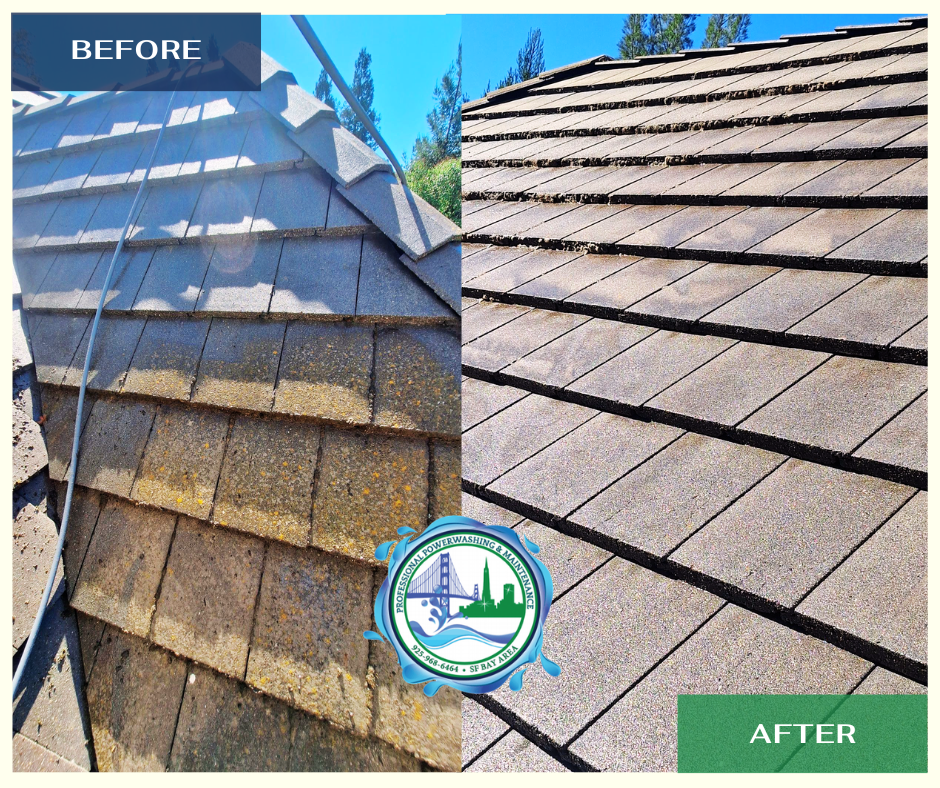
At Professional Powerwashing & Property Maintenance (PPWPM), we provide slate roof cleaning using controlled soft wash low-pressure methods specifically designed for natural slate, synthetic slate, and composite slate roofing systems. Our process removes biological contamination safely without cracking, lifting, or damaging delicate roofing materials.
If your slate roof shows moss growth, dark staining, lichen attachment, or moisture-related discoloration, the issue usually extends beyond appearance. The next step should not be pressure washing or immediate replacement. The correct step is a detailed roof assessment to determine whether soft washing and maintenance can restore and preserve the roofing system before structural deterioration spreads further.
Why Slate Roofs Require Soft Wash Low-Pressure Cleaning
Slate roofing materials cannot tolerate aggressive cleaning methods. Pressure washing damages slate systems by introducing force into a roofing structure designed around layered stone placement and controlled water shedding.
High-pressure cleaning creates several risks:
- Cracking natural slate tiles
- Delaminating surface layers of the stone
- Dislodging overlapping slate courses
- Forcing water beneath the roofing system
- Weakening flashing and fastener connections
- Accelerating underlayment deterioration
Even when immediate visible damage does not occur, pressure washing compromises the long-term integrity of the roof system. This is especially dangerous on older slate roofs and historic properties throughout the Bay Area.
Soft washing eliminates these risks by using controlled chemical treatment instead of mechanical force. The cleaning solution targets moss, algae, mold, mildew, lichen, and cyanobacteria at the root level. This allows contaminants to break down naturally without aggressive surface abrasion.
Our low-pressure slate roof cleaning process operates at pressure levels safer than standard household hose pressure. The cleaning solution performs the work while controlled application protects the roofing system.
This method delivers several long-term benefits:
- Safe removal of biological growth
- Protection of delicate slate surfaces
- Reduced moisture retention beneath tiles
- Prevention of underlayment deterioration
- Slower regrowth cycles
- Extended roofing system lifespan
Soft washing also preserves the natural appearance of slate. Pressure washing often strips surface texture and creates uneven coloration across roofing sections. Proper soft washing restores the roof without compromising the visual character of the stone.
What the Bay Area Climate Does to Slate Roofs
The Bay Area contains multiple microclimates that directly influence slate roof performance. Properties located only a few miles apart can experience completely different moisture cycles, debris accumulation patterns, and biological growth severity.
Homes closer to coastal zones experience extended fog exposure and elevated overnight humidity. Inland hillside properties experience slower airflow and concentrated debris accumulation due to surrounding vegetation. Properties near mature oak and redwood trees experience continuous organic contamination from falling leaves, sap, pollen, and small debris.
These environmental factors create persistent moisture retention throughout the roofing system.
The most common environmental conditions affecting slate roofs include:
- Coastal fog exposure
- Overnight humidity retention
- Limited airflow on hillside properties
- Debris accumulation in valleys and overlaps
- North-facing slopes with reduced drying cycles
- Tree shade that limits UV exposure
These conditions allow moss and algae colonies to establish themselves beneath and around slate tiles. Over time, this creates structural pressure within the roofing system. Moss absorbs and retains large amounts of water, increasing weight across sections of the roof while also holding moisture directly against underlayment materials.
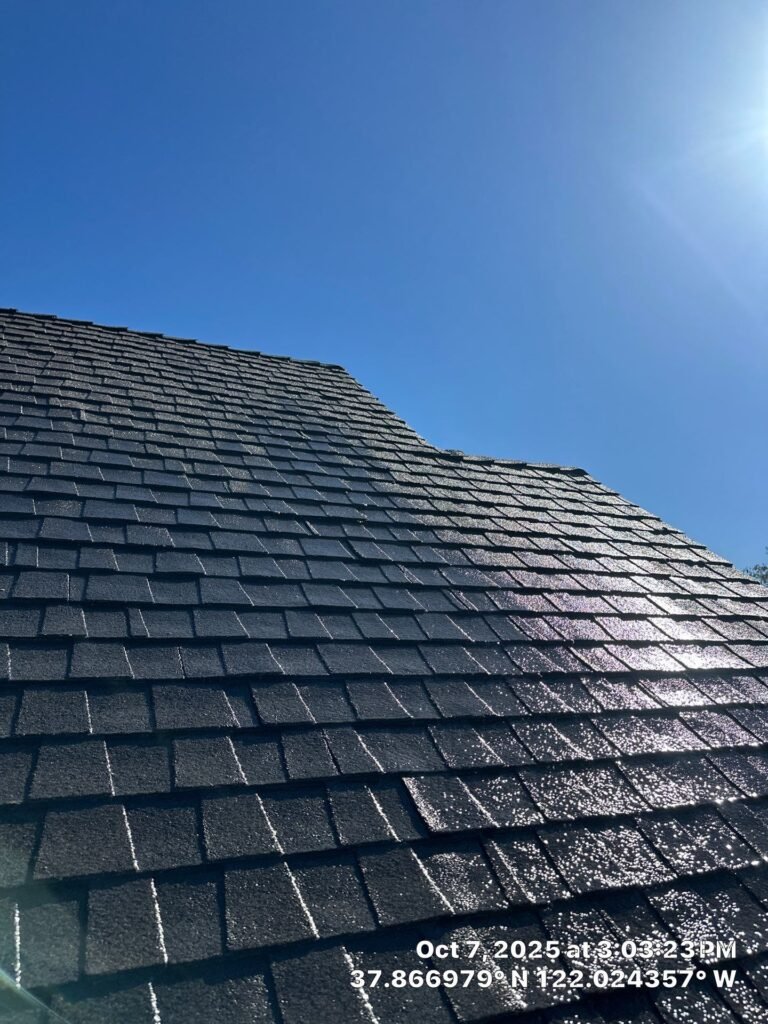
Our Slate Roof Cleaning and Preservation Process
Slate roof cleaning requires a multi-step preservation-focused process rather than a simple wash-and-rinse approach. Every stage must prioritize structural protection while eliminating biological contamination safely.
Step 1 – Comprehensive Slate Roof Inspection
We begin by evaluating:
- Slate tile condition
- Cracked or slipped slate sections
- Delamination areas
- Flashing and fastener condition
- Underlayment vulnerability
- Moss and lichen severity
- Moisture retention zones
This inspection determines whether the roof qualifies for maintenance cleaning, restoration-level treatment, or whether structural roofing repairs should occur before cleaning begins.
Step 2 – Property Preparation and Surface Protection
Slate roof cleaning requires controlled runoff management and surface preparation. We:
- Protect landscaping and nearby surfaces
- Pre-wet vegetation
- Manage drainage and runoff flow
- Secure surrounding exterior materials
This step prevents unintended chemical concentration around planting beds and surrounding surfaces.
Step 3 – Precision Soft Wash Application
We apply a slate-safe cleaning solution using controlled low-pressure equipment calibrated specifically for stone roofing systems. The cleaning solution targets:
- Moss
- Algae
- Mold and mildew
- Lichen
- Cyanobacteria
The solution requires proper dwell time to penetrate root structures and contamination beneath overlaps and fissures.
Incorrect chemical balance creates problems:
- Too weak = ineffective treatment and rapid regrowth
- Too strong = surface discoloration and material stress
We calibrate treatment strength based on:
- Slate age
- Growth severity
- Temperature
- Sun exposure
- Moisture conditions
Step 4 – Gentle Low-Pressure Rinse
After treatment, we perform a controlled rinse using extremely low pressure. This process safely removes loosened biological contamination without disturbing the slate structure.
We never pressure wash slate roofing systems.
The rinse stage also allows us to inspect drainage patterns and identify areas requiring additional treatment.
Step 5 – Optional Roof Documentation and Ongoing Maintenance Planning
Many Bay Area slate roofs belong to high-value residential properties, estate homes, or architecturally significant structures.
We can provide:
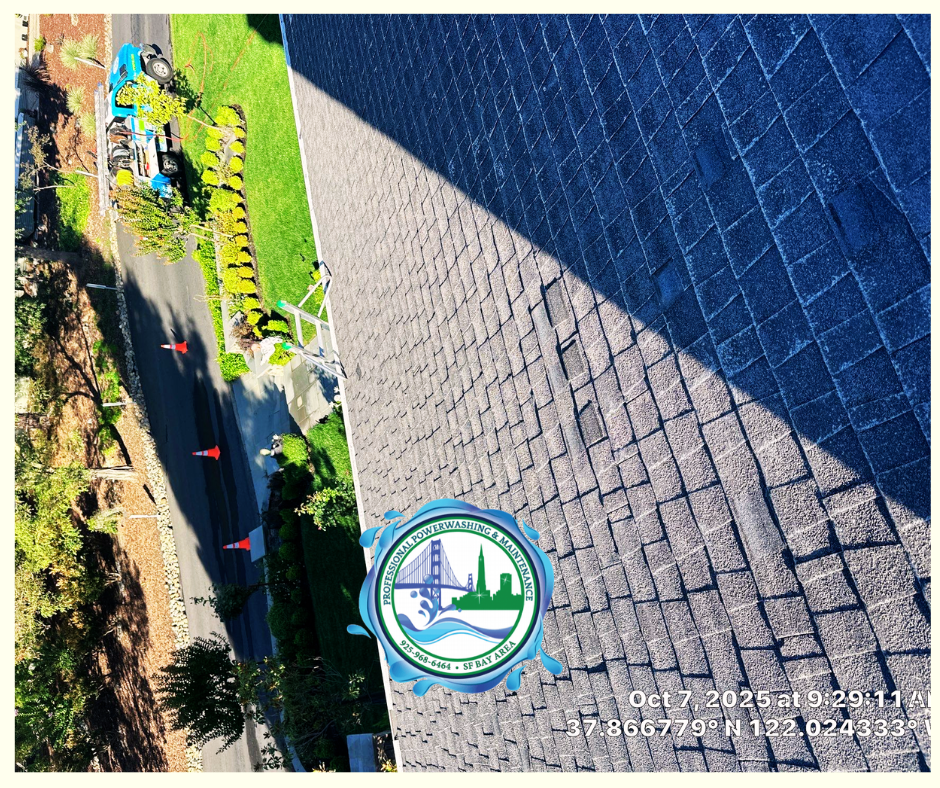
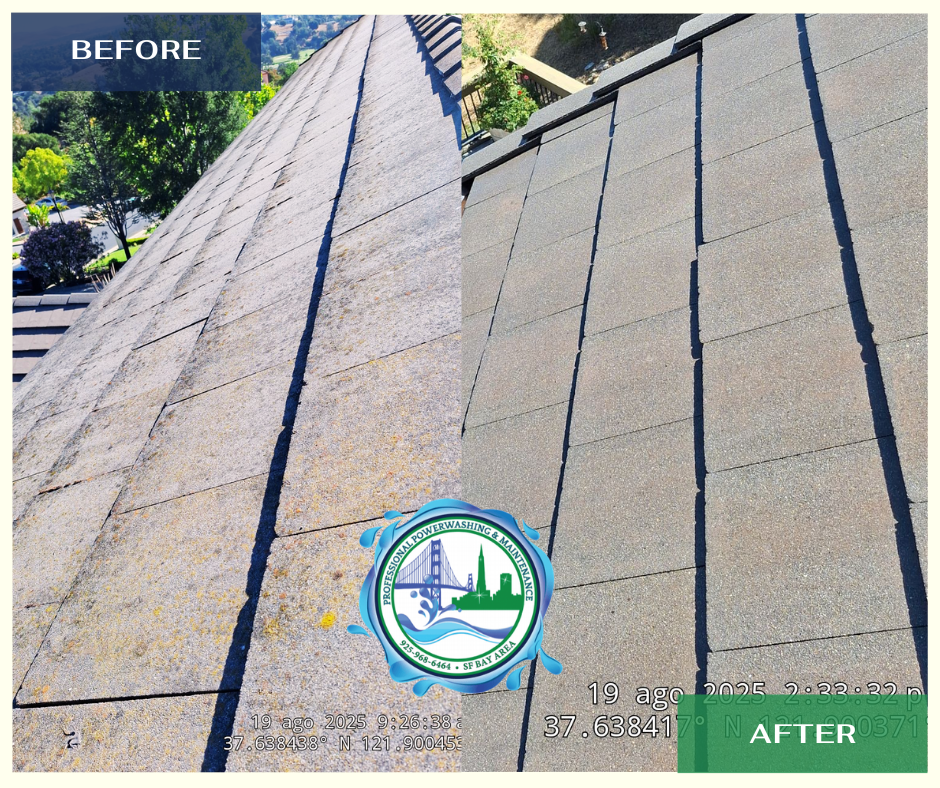
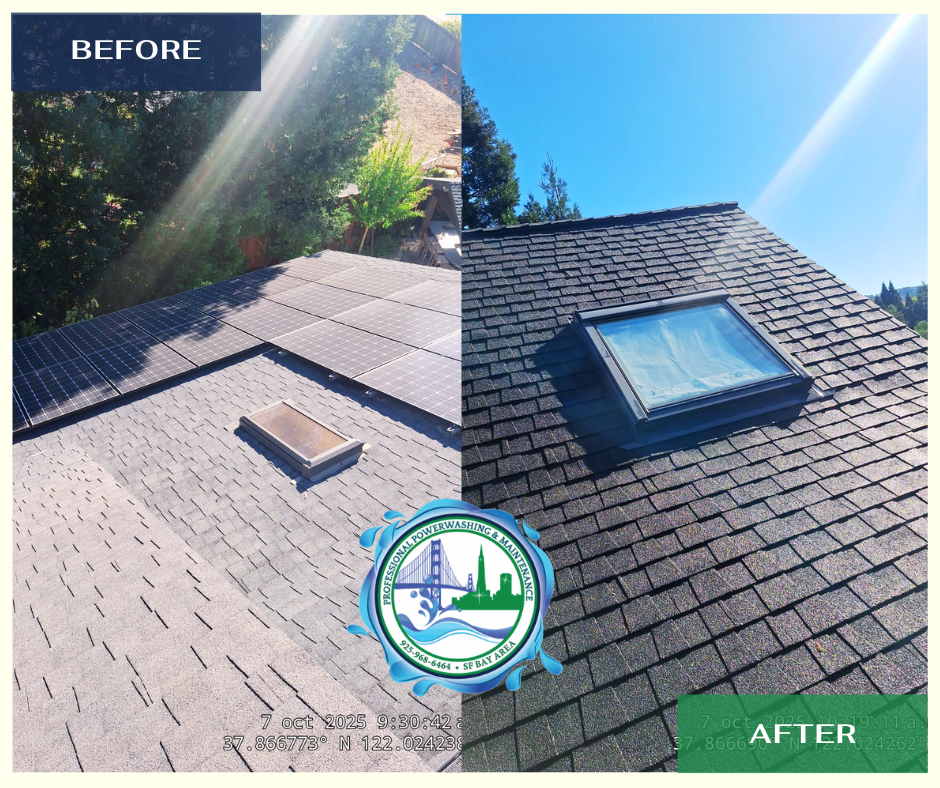
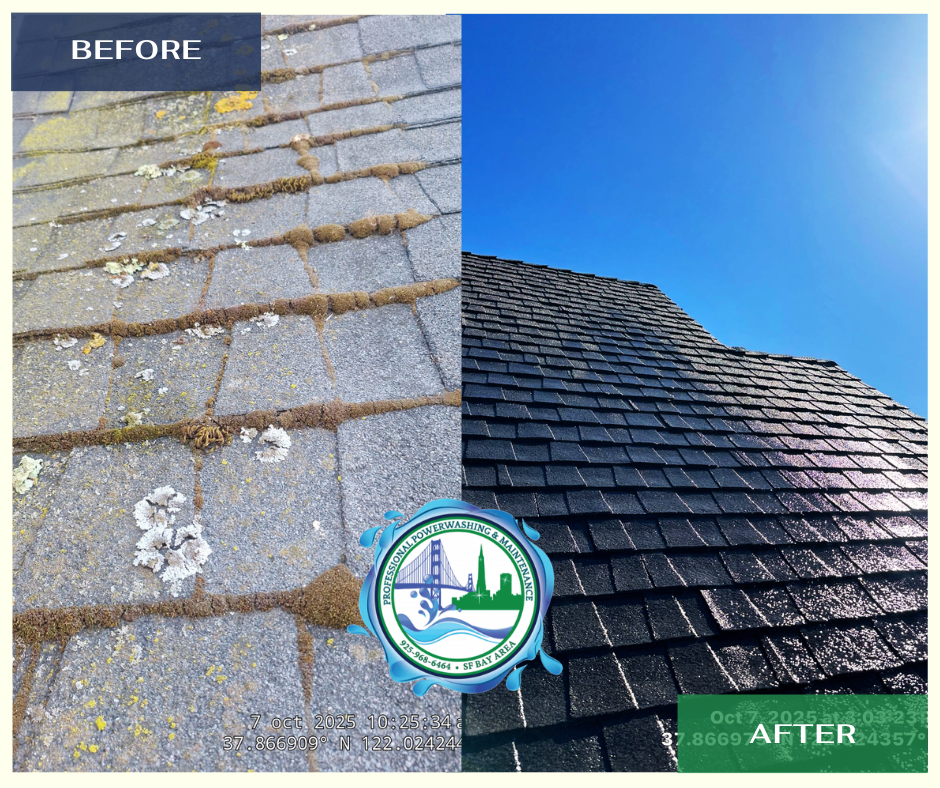
- Before-and-after roof documentation
- Drone inspection imagery
- Maintenance recommendations
- Condition reporting for insurance or contractors
This documentation helps property owners track roof condition over time and establish long-term maintenance schedules.
Important Facts Homeowners Should Know About Slate Roofs
Slate roofing systems require a different maintenance mindset compared to standard roofing materials.
Slate Itself Rarely Fails
In most cases, the slate remains structurally sound while surrounding roofing components deteriorate first. Underlayment systems, flashing, fasteners, and wood decking fail long before quality slate reaches the end of its lifespan.
Moss Causes More Than Surface Staining
Moss acts like a sponge. It traps moisture against the roof and beneath overlaps. Over time, this creates:
- Underlayment decay
- Fastener corrosion
- Freeze-thaw stress
- Tile displacement
- Structural moisture issues
Pressure Washing Creates Long-Term Damage
Many slate roofs across the Bay Area have suffered premature deterioration due to improper pressure washing methods.
Damage includes:
- Surface lamination loss
- Cracked tiles
- Water intrusion
- Broken overlaps
- Voided roofing warranties
Slate Roof Replacement Costs Are Extremely High
Slate roof replacement in the Bay Area often ranges between:
- $75,000
- $150,000
- $300,000+ for large estate properties
Maintenance protects this investment and delays major structural expenses.
When Slate Roofs Need Cleaning vs Restoration vs Replacement
Slate roofing systems require accurate evaluation before any maintenance work begins. Many homeowners assume visible staining or moss automatically means the roof needs replacement. In reality, most slate roofs fail because surrounding roofing components deteriorate long before the slate itself reaches the end of its lifespan.
Cleaning becomes the correct solution when the roof shows surface-level biological contamination without structural deterioration. This includes:
- Moss growth across shaded sections
- Dark algae streaking
- Lichen attachment
- Organic debris accumulation
- Surface discoloration
In these situations, soft washing removes contamination and restores the roofing system before moisture causes deeper damage.
Restoration becomes necessary when biological growth begins affecting surrounding components. This often includes:
- Heavy moss retention beneath overlaps
- Fastener corrosion
- Moisture intrusion around flashing
- Localized tile shifting
- Early underlayment deterioration
Restoration-level treatment may require deeper cleaning, structural evaluation, minor slate repair coordination, and ongoing maintenance planning.
Replacement becomes necessary only when structural failure progresses beyond preservation. Signs include:
- Widespread slate cracking
- Delaminated stone surfaces
- Significant underlayment failure
- Persistent leaks
- Structural wood rot beneath large roof sections
At PPWPM, we evaluate slate roofing systems based on actual roof condition rather than appearance alone. Many slate roofs that appear severely aged still retain decades of service life when biological contamination gets removed early and surrounding components remain protected.
How Often Slate Roofs Need Cleaning in the Bay Area
Slate roof maintenance intervals depend heavily on environmental exposure, surrounding vegetation, slope orientation, and moisture retention patterns. No single maintenance schedule applies to every property because Bay Area microclimates vary dramatically between neighborhoods.
Homes in heavily shaded areas typically require more frequent maintenance. Properties surrounded by mature oak, redwood, or eucalyptus trees collect organic debris continuously throughout the year. Debris settles between slate overlaps and traps moisture directly against the roofing system.
Properties in coastal or fog-prone zones experience extended dampness cycles that accelerate algae and moss growth. North-facing slopes remain wet longer after overnight humidity and morning fog exposure. Hillside properties with limited airflow also experience slower drying cycles.
Typical maintenance intervals include:
- Heavy tree coverage and shade: every 2–3 years
- Moderate exposure with partial sunlight: every 3–5 years
- Open sun exposure with minimal debris: every 5–7 years
Ignoring maintenance allows contamination to compound over time. Moss thickens, debris accumulates beneath overlaps, and moisture retention increases across the roofing system. Once this process accelerates, restoration becomes significantly more expensive and structural risks increase.
Regular maintenance stabilizes the roof system before damage spreads beneath the slate. It also allows early identification of flashing issues, tile displacement, and drainage problems before larger repairs become necessary.
At PPWPM, we recommend maintenance schedules based on the actual environmental conditions surrounding the property rather than generalized timelines.
Service Areas — Slate Roof Cleaning Across the Bay Area
Tri-Valley and East Bay Expansion Areas
Pleasanton, Dublin, Livermore, Castro Valley, Hayward, Fremont, Newark, Union City, Sunol
These regions contain a mix of open sun exposure and tree-heavy residential zones requiring different maintenance intervals and treatment approaches.
Alameda County and Inner East Bay
Oakland, Berkeley, Piedmont, Montclair, Berkeley Hills, Albany, Alameda, Emeryville
Many properties in these areas include older slate roofs, historic homes, and architecturally sensitive structures requiring controlled preservation-focused cleaning.
Peninsula and South Bay Coverage
Palo Alto, Menlo Park, Redwood City, Hillsborough, Burlingame, San Mateo, Foster City, Belmont, San Carlos, Mountain View, Cupertino, Saratoga, Los Gatos, Sunnyvale, San Jose
These areas contain luxury residential properties where slate roof maintenance directly impacts property appearance, value, and long-term structural preservation.
North Bay and Extended Northern California
Napa, Sonoma, Petaluma, Santa Rosa, Healdsburg, Windsor, Calistoga, St. Helena
Selective service coverage for estate properties and luxury homes with slate roofing systems requiring specialized care.
Frequently Asked Questions About Slate Roof Cleaning
Yes. Pressure washing can crack slate tiles, strip surface layers, dislodge overlaps, and force water beneath the roofing system. Slate roofs require low-pressure soft washing methods specifically designed for natural stone roofing systems.
Results depend on environmental exposure. Tree-heavy and shaded properties typically require maintenance every 2–3 years. More open properties with better airflow and sun exposure may last 5–7 years between cleanings.
Yes. Moss traps moisture beneath slate overlaps and increases weight across the roofing system. Over time, this accelerates underlayment deterioration, fastener corrosion, flashing damage, and moisture intrusion.
Natural slate contains microscopic fissures and porous characteristics that allow contaminants and moisture to settle into the stone surface. This contributes to lichen attachment and biological staining over time.
Proper soft washing preserves the natural appearance of slate. Incorrect methods such as pressure washing or harsh chemical use can discolor or damage the stone surface.
Slate roof replacement costs often range from:
- $75,000
- $150,000
- $300,000+ for large estate properties
This is why long-term maintenance and preservation are critical.
Yes. Properly maintained natural slate roofs can last well over a century. In most cases, surrounding roofing components fail before the slate itself deteriorates significantly.
Absolutely. Cleaning protects underlayment systems, flashing, fasteners, and structural components beneath the slate. It also delays major replacement costs and preserves property value.
Signs of replacement-level deterioration include:
- Widespread cracking
- Delaminated tiles
- Persistent leaks
- Structural softness beneath roofing sections
- Severe underlayment failure
Most stained or moss-covered slate roofs still qualify for maintenance rather than replacement.
Slate roofs require specialized access methods and controlled movement. Improper foot placement can crack tiles or weaken overlaps. Slate roof cleaning should only be handled by contractors familiar with slate systems.
Yes. Clean slate roofs improve curb appeal, strengthen buyer confidence, and support luxury property presentation. Realtors frequently highlight properly maintained slate roofing systems in high-value home listings.
Protect Your Slate Roof Before Structural Damage Develops
If your slate roof shows:
- Moss accumulation
- Algae staining
- Lichen attachment
- Dark streaking
- Moisture retention issues
the problem usually extends beyond surface appearance.
Soft wash slate roof cleaning protects:
- Underlayment systems
- Structural components
- Flashing and fasteners
- Roof lifespan
- Property value
At Professional Powerwashing & Property Maintenance, we evaluate slate roofing systems based on real field conditions across San Ramon and the Bay Area. We focus on preserving the roof system safely while preventing long-term structural deterioration.
Request a slate roof assessment and determine whether cleaning and preservation can extend the life of your roofing system before replacement becomes necessary.
What Your Neighbors Have Been Saying About Us
EXCELLENT Based on 126 reviews
 Posted on Google
 Greg BouchakianThey did a great job! Very thorough, on time, and made sure I was happy when done.Posted on Google
 Mary ShefferThis company was a pleasure to work with. They were punctual, courteous and did a terrific job. This was sll the way at the top with Josh to the men who actually did the work. My house is 40 years old and it now looks almost brand new. 😊 Thank you so much!Posted on Google
 tom albertexcellent service for a very moldy patio area as well as walkways. I would recommend these folks without reservation.Posted on Google
 DAVID ROSEAnd work was done in a fast and efficient mannerPosted on Google
 Kunjal VaitharaI couldn’t be happier with the service from Professional Power Wash and Management (PPWPM)! This job was done at my home in Walnut Creek, and the team did an absolutely fantastic job with both the power washing and the windows—everything looks spotless and refreshed. The windows are super clean I have a property with a front yard, backyard, and side yard—quite an area to be cleaned—along with a mix of surfaces including bricks, concrete, and even a tennis court. They handled every single detail with care and precision. It’s not easy to manage such variety, but they truly did an outstanding job across the board. A special shoutout to Ray, who I was in touch with throughout the process. He is truly wonderful—extremely patient, professional, and has outstanding customer service. What I really appreciated is that he genuinely understands what a customer wants. I’m someone who is very particular (a bit of a clean freak!), and when I pointed out certain things, he made sure everything was taken care of without hesitation. That level of attention and responsiveness really stands out. Honestly, when a business truly takes care of its customers, you know they’re going to do well—and that’s exactly the feeling I got here. Communication was seamless—every text message was responded to promptly, with no delays or confusion. The team was very punctual and arrived right on time. Everything was smooth and efficient from start to finish. They also offer a wide range of services, and based on this experience, I’ll definitely be using them again in the future. It was such a pleasant experience overall. You come across very few companies whose service is truly 10 on 10—and this is definitely one of them. I highly recommend PPWPM to everyone in Walnut Creek and beyond who is looking for power washing or any of the services they offer. I’m 101% sure they’ll do a great job. If you love a fresh-looking home, you will be absolutely happy and thrilled!Posted on Google
 Eva DeagenOn time. Friendly people. Great job. Great price.Verified by TrustindexTrustindex verified badge is the Universal Symbol of Trust. Only the greatest companies can get the verified badge who has a review score above 4.5, based on customer reviews over the past 12 months. Read more
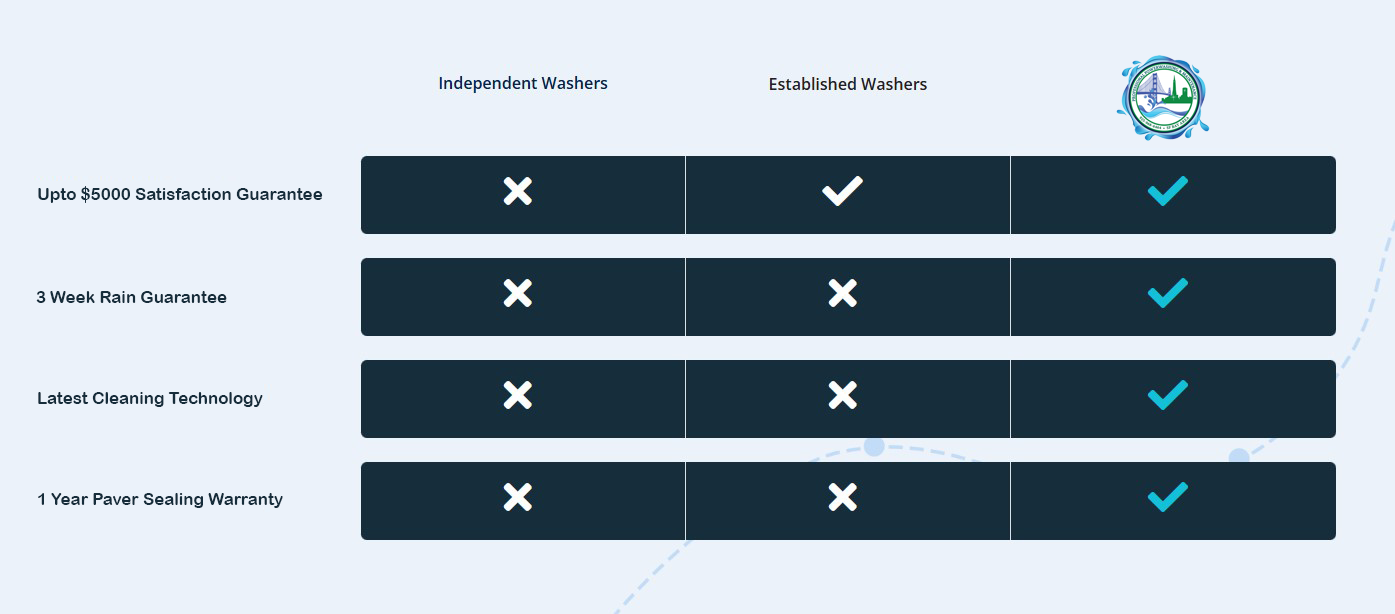
See How PROFESSIONAL POWER WASHING & PROPERTY MAINTENANCE COMPANY Is Different Than Other Service Providers
Secure The Top-Tier Service Near You
- Dublin, CA
- Danville, CA
- Alamo, CA
- Fairview, CA
- Castro Valley, CA
- Pleasanton, CA
- Hayward, CA
- Ashland, CA
- Cherryland, CA
- Moraga, CA
- San Lorenzo, CA
- San Leandro, CA
- Walnut Creek, CA
- Livermore, CA
- Lafayette, CA